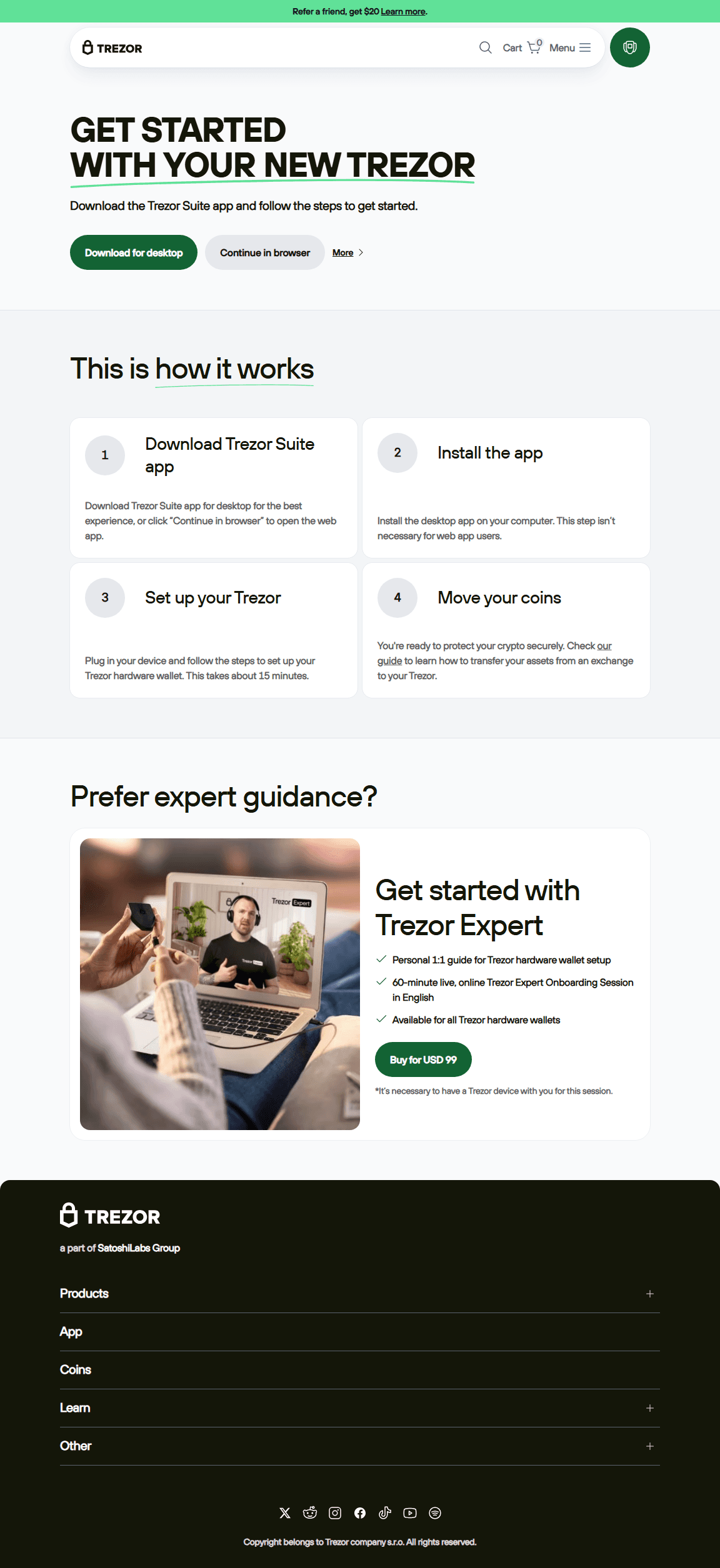
Trezor.io/Start – Securely Set Up Your Trezor Wallet
Cryptocurrency gives you full control over your assets—but that control comes with responsibility. Unlike traditional banking, there’s no central authority to reset a password or recover lost funds. Misplacing a wallet, forgetting your PIN, or losing your recovery seed can mean permanent loss of your digital assets.
Trezor hardware wallets are designed to protect your cryptocurrency, and Trezor.io/start is the official portal for safely initializing your wallet. This guide walks you through why using the official setup page matters, what you need before you begin, and the complete step-by-step process for setting up your Trezor device.
What Is Trezor.io/Start?
Trezor.io/start is Trezor’s official onboarding portal. It provides verified software downloads, step-by-step instructions, and guidance to set up your wallet securely. Using this page ensures you avoid counterfeit apps, phishing sites, and other unsafe methods that could compromise your cryptocurrency.
The portal is designed for both beginners and experienced users, guiding you through wallet initialization, PIN setup, and recovery seed management. By following Trezor.io/start, you start your crypto journey with maximum security from the first step.
Why the Official Setup Page Is Important
The cryptocurrency space attracts scammers. Fake websites, phishing emails, and malicious apps are common, and they often trick users into revealing private keys or recovery seeds. A single mistake can lead to irreversible loss of funds.
Trezor.io/start helps prevent these risks by:
Providing official Trezor Suite downloads
Verifying the authenticity of your hardware wallet
Delivering accurate, up-to-date setup instructions
Teaching best security practices for long-term wallet safety
Using unofficial sources exposes your crypto to unnecessary risks, making the official start page the safest place to begin.
How Trezor Wallets Protect Your Crypto
Trezor wallets store private keys offline in a secure hardware device. Unlike software wallets or exchange accounts, the private keys never leave the device. Every transaction requires manual confirmation on the Trezor hardware, ensuring your funds remain protected even if your computer is compromised.
This offline security model is why Trezor wallets are widely regarded as one of the safest ways to store cryptocurrency—but proper setup via Trezor.io/start is essential.
Who Should Use Trezor.io/Start?
Trezor.io/start is intended for:
First-time Trezor users
Crypto holders transferring assets from exchanges
Users installing Trezor Suite for the first time
Individuals restoring a wallet using a recovery seed
Regardless of your experience, starting with the official portal ensures your wallet is configured securely and correctly.
Preparing for Setup
Before beginning, ensure you have:
A genuine Trezor hardware wallet
A secure computer or mobile device
A stable internet connection
Pen and paper for your recovery seed
Perform the setup in a private, distraction-free environment to minimize errors.
Step-by-Step Trezor Wallet Setup
Step 1: Visit Trezor.io/Start
Type the official URL directly into your browser. Avoid clicking links from emails, ads, or social media posts to prevent phishing.
Step 2: Download Trezor Suite
Trezor Suite is the official application for managing your hardware wallet. Download the correct version for your operating system directly from the start page.
Step 3: Install and Launch Trezor Suite
After installation, open Trezor Suite and select your Trezor device model. The application provides clear step-by-step instructions throughout the setup.
Step 4: Connect Your Trezor Wallet
Connect your Trezor using the USB cable included with your device. Follow instructions on both the Trezor device and the Suite interface to proceed.
Securing Your Wallet
During setup, you will create a PIN code. This code protects your wallet if it is lost or stolen. Multiple incorrect PIN attempts will temporarily lock the device.
Next, your Trezor generates a recovery seed, a list of words that acts as the only backup for your wallet.
Recovery Seed Best Practices:
Write it down on paper only
Never store it digitally
Keep it offline and secure
Never share it with anyone
Anyone with access to this seed can gain full control of your cryptocurrency, so safeguarding it is critical.
Device Verification and Firmware Updates
Trezor.io/start allows Trezor Suite to verify that your device is authentic and untampered. Firmware updates may be prompted to improve security, fix bugs, and add support for new cryptocurrencies. Always perform updates directly through Trezor Suite to maintain device safety.
Managing Crypto with Trezor Suite
Once setup is complete, Trezor Suite is your main platform for managing assets while keeping private keys offline.
With Trezor Suite, you can:
Add and manage multiple crypto accounts
Send and receive assets securely
Track balances and transaction history
Install apps for supported cryptocurrencies
Access features like staking or swaps (availability may vary by region)
Trezor supports thousands of coins and tokens, making it suitable for both beginners and advanced users.
Maintaining Long-Term Security
Even after setup, security is ongoing. Trezor recommends:
Keeping Trezor Suite updated
Verifying all transactions on the device screen
Avoiding public or shared computers
Ignoring unsolicited messages claiming to be support
Never entering your recovery seed online
Trezor will never ask for your PIN or recovery seed.
Official Support
If issues arise, Trezor.io/start provides official guides, FAQs, and troubleshooting resources. Using official support ensures accurate instructions and reduces the risk of scams.
Final Thoughts
Trezor.io/start is the safest and most reliable way to begin using a Trezor hardware wallet. It ensures verified software installation, device authenticity, and proper wallet setup from the start.
Following the official setup process and practicing strong security habits allows users to confidently protect their cryptocurrency and maintain full control over their digital assets in today’s digital world.